Home | Koi Pond | Koi Pond Filter | Koi Classification | Koi Care | Koi Equipment | Landscaping

Wednesday, July 1, 2015

Disolved Oxygen in The Koi Pond

Oxygen is essential for koi growth, More fish die from a lack of oxygen than any other cause. Koi Keeper should always monitor the actual disolved oxygen in the water every time. Disolved oxygen in the water should 't less than the required by koi fish. Oxygen levels can only be determined by measurement with a water test kit or an oxygen meter like as Ammonia test kit. Submerged plants and algae take oxygen out of the water at night. Their effect can be significant when you have green water in the koi pond. In Warm water koi increased consume oxygen.

Friday, June 5, 2015

Koi Pond Filter Requirements

Success of the koi pond filter depends on the proper design of water filter. There are some things to consider to design koi pond filter. Make ideal flow rates and filter retention times for koi pond filtration systems is good idea. Because long retention time to make bacteria alive and well so decomposition of ammonia to be perfect. If water flow in the koi pond filter is too fast is not good as well as water flow is too slow.

Monday, June 1, 2015

How To Control Algae In The Koi Pond
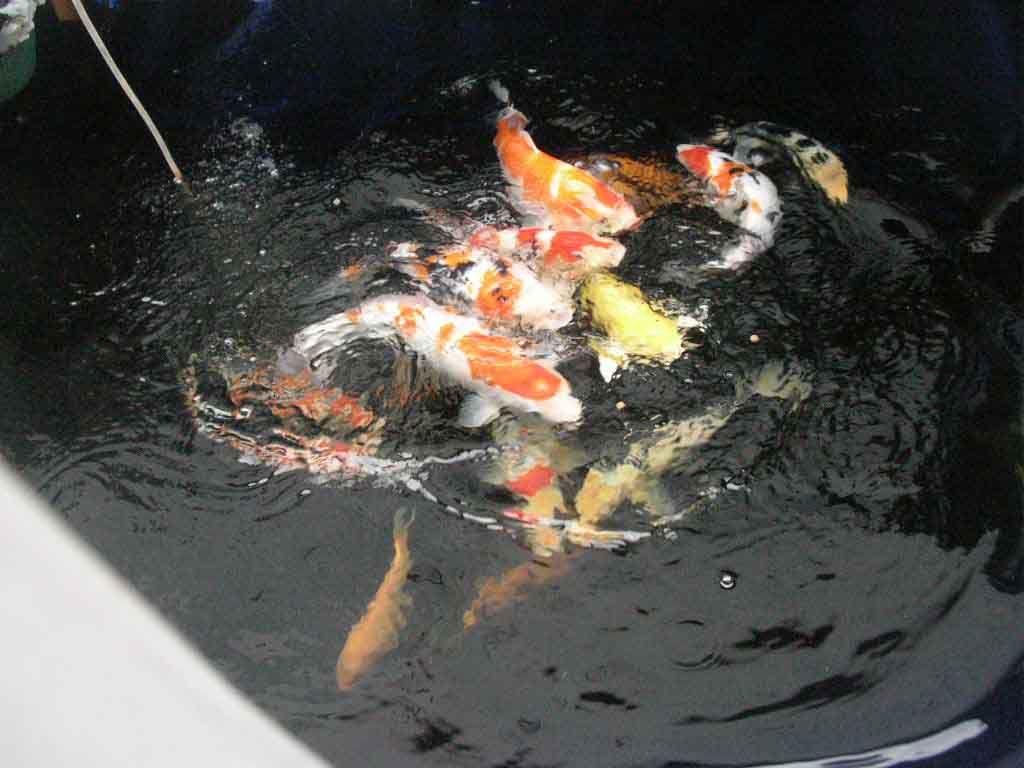
Algae booming in the koi pond is very annoying because we can not enjoy the beauty of koi fish. Algae booming makes the green water  and covered the landscape to the bottom of koi pond.In an outdoor pond algae growth will be very fast especially if the pond is not adequately filter. Algae growth is also influenced by levels of ammonia from the fish feces. Therefore the density of fish in the pond were also given the role.Algae growth on a koi pond should be controlled so that the pond stays clean and bright.

Thursday, May 21, 2015

Koi Treatment with Heat Therapy

Koi are not truly a cold water species. Although they can live in very cold water, their metabolism functions better when the water temperature is near 76 degrees Fahrenheit. Koi's immune system is very slow below 65 degrees Fahrenheit. Many Koi ponds throughout the world never reach prime temperature for Koi.

Monday, May 18, 2015

BASIC KOI POND DESIGN


KOI POND DESIGN -- This article is a compiation of many koi experts' and enthusiasts' views, with an intermingling of my own views. . Besides collecting data from amny issues of KOI USA and Rinko Magazines, there is reference to Tetra's Koi Encyclopedia and heavy emphasis on Grant Fujita's book. My main goal is to give the koi hobbyist the foundation of what both a Basic beginner's pond as well as an ideal Koi  pond should contain. Realizing that not everyone has the space, money, nor ambition to do all that is mentioned in my paper for the Ideal Koi Pond. I at least try to emphasize those things that every koi pond should have to both minimize the maintenance and, even more importantly, to improve the health and quality of their koi.

Tuesday, May 12, 2015

Green Water Problem

Green water in the koi pond is the scourge of outdoor pond owners. Green water is caused by a population explosion of algae in the koi pond. Algae are microscopic, single-celled plants, which can easily multiply to a density of as much as 7,000-15,000 per milliliter. With that many of them in the water, it's no wonder that the water turns green. Koi ponds can get high concentrations of phosphates from food decomposition, and nitrates from the nitrification cycle. High concentrations of phosphates and nitrates are the food for pond algae, along with some iron as a catalyst. So high ammonia in the koi pond will make koi pond green.